Appropiate Technology - Low Tech
The so-called appropriate technology is the one that adapts to the environmental, ethnic, socioeconomic and cultural circumstances of the users.
In developing countries, technologies that focus on the use of labor rather than on investment in machinery are called that. In industrialized countries, it defines technologies that take into account environmental or ethical consequences. Schumacher defines a third level: "intermediate technology," as one that is more effective, and expensive, than low intensity, but is still 10 times cheaper than highly sophisticated technology. An example of intermediate technology would be a bicycle, while the car would be high tech.
Low intensity technologies also consider it necessary that repair and maintenance processes can be done locally. It is not very useful to have a solar battery charger if we are unable to repair it locally or if we do not have the resources to buy another one. In artífexbalear we have defined the blacksmith of the town as a technological limit, beyond which, technology overflows the local economy and therefore becomes captive.
In the West, the custom of tying dogs with sausages has made us forget that a large part of humanity still does not have access to electricity, or that we will never have the means to buy devices that are customary for us.
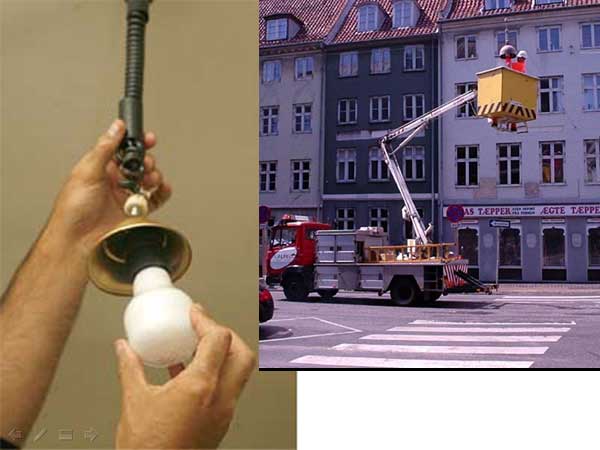
The image reflects the progressive implantation of gigantism - a crane to screw a light bulb. Operationally necessary, but conceptually wrong: by moving solutions away from the human scale, they are gradually being left to those who can afford them, limiting our creativity and ability to use the resources available in our immediate environment with an adequate effort-result relationship.
Let's look at a few examples of what is possible by thinking something differently:
The human body has enormous potential, which can be multiplied several times with the right technology. We can think of technologies that take advantage of:
- The levers (give me a foothold and I will move the world, said Archimedes. The Cheetah is an invention consisting of springs that allow a person to run faster.
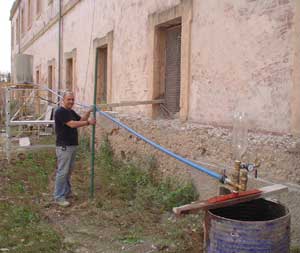
- The weight and balance of the human body (water pump).
- The greatest strength and length of the legs with respect to the arms. (bike)
- The inertia generated after an initial movement (trapiche, swing, gravel crusher ...)
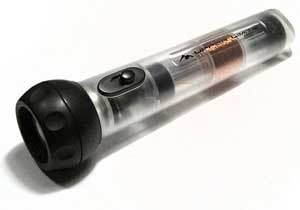
The flashlight faraday is a flashlight that is charged by shaking it by hand or by repeatedly activating a trigger.
- Solar cookers allow efficient cooking with sunlight.
- The biomass stoves allow cooking in areas of low firewood.
- LED bulbs consume 10 times less than a low consumption bulb.
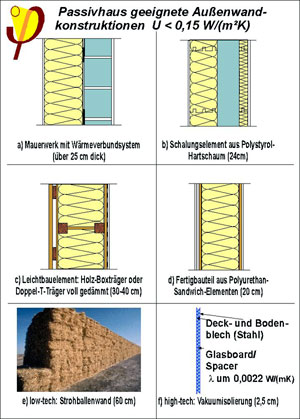
- Passive air conditioning systems save on heating and cooling, that is, on electricity and oil, non-renewable resources.
(Img: walls designed for the Passivhaus standard)
Cities will concentrate most of humanity. The improvement of any urban process has huge global consequences.
Every day 180,000 people leave the countryside and go to the poverty belts that surround the cities. Now they are 1000 million, in 30 years they will be double, a real demographic bomb.

Materials: Adobe, compressed earth, ferrocement, microtejas, eartship, hydraulic tiles, gravel crushers...
Techniques: arches and vaults, compression construction, passive air conditioning, super insulation...
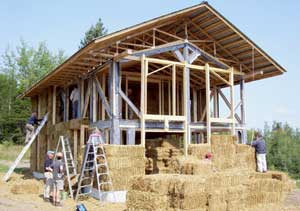
(Img: house of straw bales with post & beam structure)
Microturbines for waterfalls, wind, solar, tidal, geothermal, biogas, biomass, co-generation, decentralized energy...
Water tanks, hydraulic mortars, ram pumps, solar purification, desalization, dry toilets ...
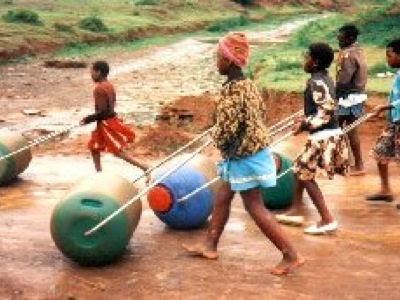
(Img: water transport with self-supporting drums).
Electric cars, hybrid cars, ultralight bodies, urban transport, train ... yes.
... but also, to choose the house near the places that we plan to frequent, in order to be able to move on foot or by bicycle. The best home is not the best communicated but the one from which you can go to the market, school, church, sports center ... on foot or by bicycle.
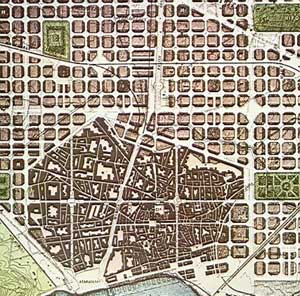
(Img: Plan Cerdá, widening of Barcelona, by Idelfonso Cerdá.)
Organic farming, permaculture, Fukuoka method, hydroponics, urban gardens, transgenics ...
Solar cookers, water filters, mechanical procedures without electricity ...
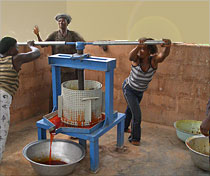
(Img: palm oil extractor of appropriate technology).
Microcredits, Triodos Bank, Grameen bank, Grameen phone, transition cities, earthships, slow movement, food sovereignty, cafs ...
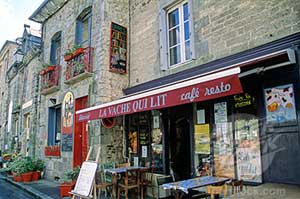
(Img: Becherel, city of the book, generator of a sustainable local economy).